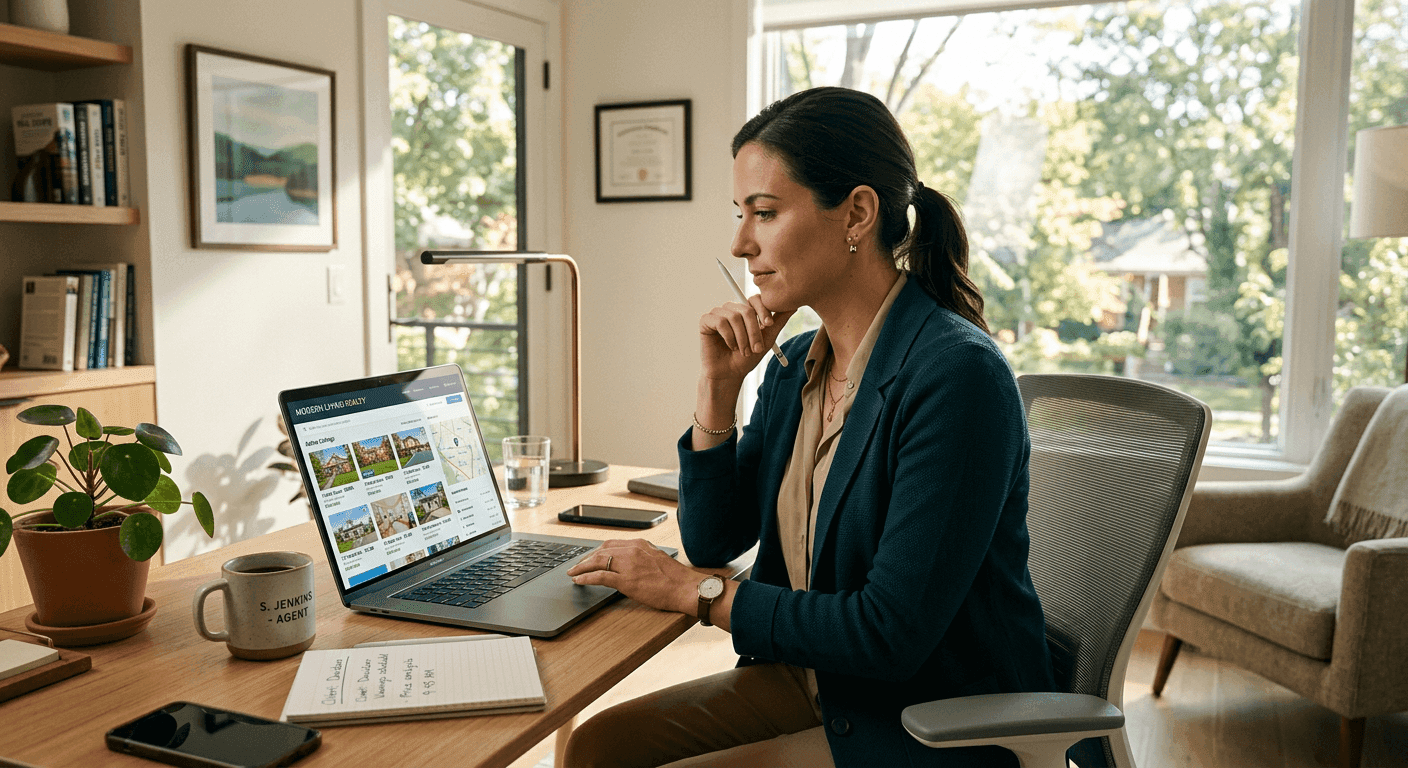
Create Better Open House Marketing with AI

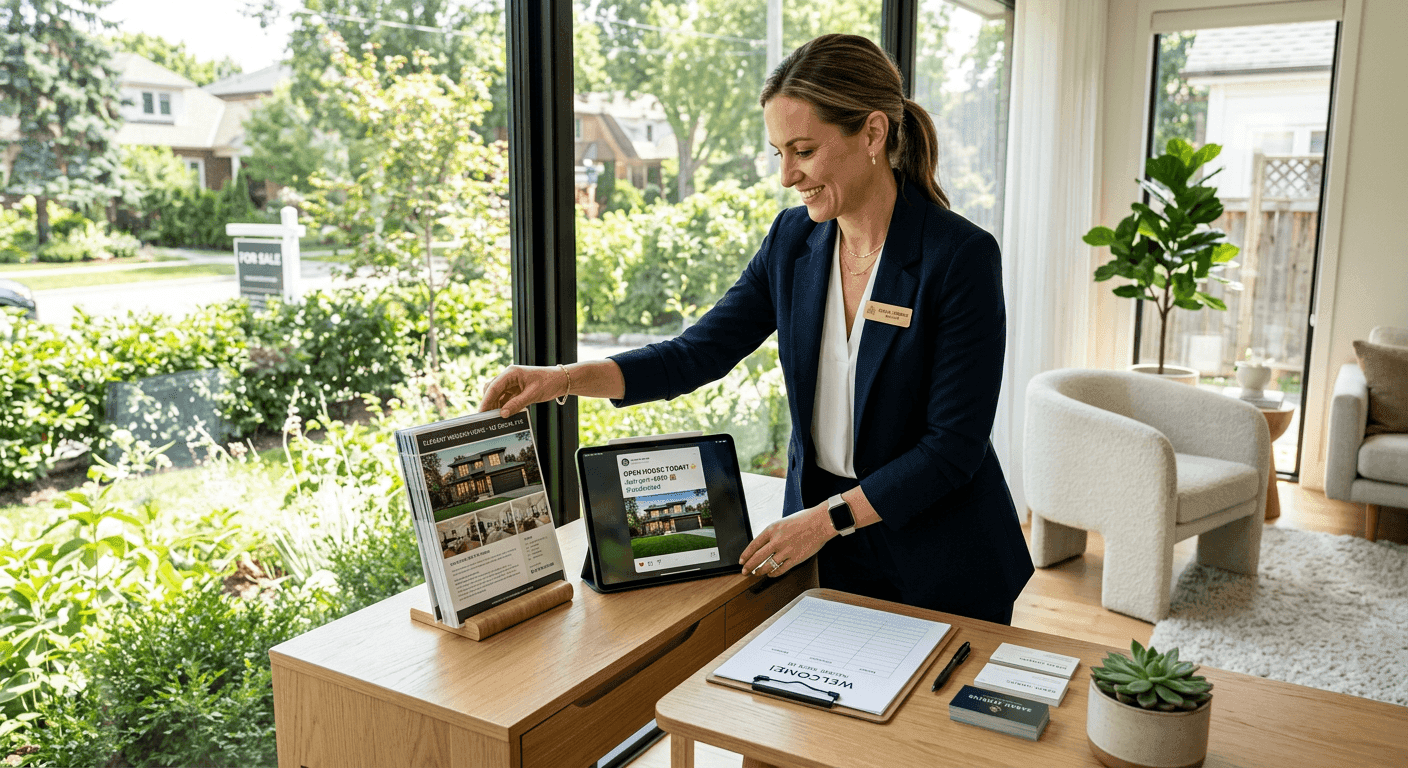
How to Use AI for Open House Marketing Materials That Drive Better Follow-Up
Why AI Belongs in Your Open House Workflow
A great open house takes more than a few signs and a stack of printed flyers. The events that convert require consistent promotion, clear property messaging, buyer-facing materials that stay compliant, organized lead capture, and fast follow-up. Building all of that from scratch for every listing is where most agents lose time.
That is where technology can help. Using AI for open house marketing materials can help agents move faster, but it should be treated as a drafting and organization tool, not a replacement for MLS accuracy, broker review, or local market judgment.
Too many agents recreate flyers, emails, social posts, and follow-up messages from zero every time. The opportunity is to turn verified listing details into reusable, branded materials you can refine in minutes. The caution is that real estate advertising must be accurate, non-misleading, and compliant with fair housing, MLS, brokerage, and state-specific rules.
In this guide, you will learn what to create, what inputs to gather first, how to build a practical open house package, how to sharpen live conversations, and how to follow up in a way that actually earns responses.
What AI Can Help You Create for an Open House
AI is most useful for drafting, organizing, summarizing, rewriting, and repurposing. It should not be used to invent property claims, replace compliance review, or make pricing recommendations without professional judgment. Think of it as a fast assistant that works only with facts you provide.
Print materials
AI can help draft or refine the physical pieces buyers pick up at the door:
- One-page listing flyers
- Feature sheets
- Upgrade summaries
- Neighborhood overview handouts
- Buyer FAQ sheets
- QR-code handout copy
- Sign-in table prompts
Always verify facts such as square footage, lot size, room counts, HOA dues, tax information, school references, and included features against the MLS, seller disclosures, public records, and brokerage-approved sources before anything goes to print.
Digital assets
AI can also help coordinate your online promotion so the messaging stays consistent across channels:
- Email invitations
- Social media captions
- Short-form video scripts
- Landing page copy
- Open house reminder texts
- Post-event follow-up emails
- CRM notes and lead tags
Email and text outreach should follow applicable consent and marketing rules, especially for automated or recurring communication.
Agent-facing prep materials
Some of the best uses are internal tools that only you see:
- Property talking points
- Likely buyer questions
- Objection-response notes
- Comparable listing summaries
- Seller feedback templates
- Follow-up call outlines
These support your preparation. Do not hand them to buyers unless they have been reviewed for accuracy and compliance.
Start With the Right Property and Audience Inputs
This is the most important step. The quality of AI output depends entirely on the quality, accuracy, and compliance of what you feed it. Garbage in, garbage out applies directly to marketing copy.
Property details that matter
Gather these inputs before you prompt anything:
- MLS remarks and verified listing fields
- Seller-approved improvements and upgrades
- Recent repairs or renovations
- Showing instructions and access notes
- Disclosures and known material facts, handled according to local rules
- Floor plan or layout notes
- Pricing context, including recent comparable sales when appropriate
- HOA details, fees, amenities, and restrictions if applicable
- Utility, insurance, flood zone, or property condition considerations where relevant and verified
Never ask AI to "make the home sound better" by adding unsupported claims. Ask it to make verified information clearer, more concise, and more buyer-friendly.
Buyer persona and market context
Audience inputs help AI shape tone and emphasis, but use them responsibly:
- Likely buyer motivations, such as move-up buyers, downsizers, investors, or first-time buyers
- Price range considerations
- Commute patterns and neighborhood demand drivers
- Local inventory and days-on-market conditions
- Financing considerations that may affect buyer questions
Fair housing rules require that ads avoid any language tied to protected classes. Focus on property features and location facts, not phrases that imply who "should" live in a home.
National housing numbers are not enough for local marketing. Existing-home sales, inventory, pricing, and demand shift by market and month, so ground your prompts in current local context rather than broad national generalizations.
Compliance and brokerage rules
Before publishing, check the rules that govern your advertising:
- Fair housing advertising standards
- MLS advertising rules
- Brokerage brand and review policies
- State licensing advertising requirements
- Copyright rules for listing photos, maps, and third-party data
- Team and brokerage identification requirements
- Rules around commission, compensation, agency, or representation language where applicable
Industry ethics standards require agents to avoid exaggeration, misrepresentation, and false or misleading statements in advertising, which is exactly why any AI-generated material should pass through broker review. This is not legal advice, and requirements vary by state, MLS, and market.
Build a Core Open House Marketing Package
Build this package once, refine it for each listing, and improve it after every event. The goal is a repeatable system, not a one-time scramble.
Listing flyer or feature sheet
A strong flyer usually follows this structure:
- A factual opening description
- Five to seven scannable property highlights
- Room-by-room or feature-by-feature benefits
- An upgrade list with dates if verified
- Key showing details
- Agent contact information and brokerage attribution
- Required disclaimers, if brokerage or MLS policy requires them
A useful prompt direction sounds like this: "Using only the verified facts below, draft a one-page open house flyer with a professional tone, short paragraphs, and bullet points. Do not add claims about condition, schools, investment potential, or neighborhood demographics unless included in the source details."
Use benefit-led phrasing without exaggeration. Avoid unsupported claims such as "best," "perfect," "guaranteed," or "will appreciate." Do not imply a buyer outcome, a lifestyle promise, or a protected-class preference.
Social media and email promotion
Plan your assets across the week leading up to the event:
- Announcement post
- Reminder post
- Short video caption
- Email invitation to buyer leads
- Email to neighborhood contacts
- Day-of reminder message
AI can generate multiple versions for different platforms while keeping the underlying facts consistent, which supports truthful advertising and reduces the risk of misleading statements slipping into one channel.
Try a prompt like this: "Create three social captions and one email invitation for an upcoming open house. Keep the tone professional, local, and factual. Include the date, time, property type, key verified features, and a clear invitation to attend."
Neighborhood and lifestyle handout
A responsible neighborhood resource can include:
- Nearby parks, shops, transit, highways, and community resources
- Commute considerations stated as distance or estimated drive time only if verified
- Links or QR codes to public resources
- School district information, with a note that buyers should verify boundaries directly with the district
- Local market context, such as inventory or pricing trends, when supported by current data
Avoid language like "family-friendly," "safe," "exclusive," or "ideal for young professionals." Focus on objective amenities and buyer verification instead.
Market conditions change quickly by region and month, so refresh these materials with current local pricing, inventory, and days-on-market context rather than reusing them unchanged.
Sign-in and lead capture copy
Your sign-in process should collect the right information and set clear expectations:
- Name, phone, email, buying timeline, financing status, and agent representation status
- Consent language for follow-up
- A clear statement of what the visitor will receive
- An optional QR code to a digital form
- A CRM tagging plan for after the event
SMS and email marketing may require consent and opt-out handling depending on how you follow up, so build that into your form language from the start.
Use AI to Improve the Live Open House Experience
AI-assisted preparation helps you sound organized, not scripted. The point is to be ready for better conversations with buyers, neighbors, and potential seller leads.
Property talking points
AI can help you organize what to emphasize:
- Top three property strengths
- Layout benefits
- Upgrade explanations
- Utility or maintenance details
- Outdoor space highlights
- Storage, parking, and HOA features
- Questions to ask if visitors show interest
A helpful prompt direction: "Turn these verified property details into a concise open house talk track for an agent. Include a 30-second overview, five highlight bullets, and likely buyer questions."
Buyer qualification prompts
Keep your qualifying questions professional and compliant:
- "What brought you in today?"
- "Are you actively searching in this price range?"
- "Are you working with an agent?"
- "Do you have a preferred timeline?"
- "Have you spoken with a lender yet?"
- "What features are most important in your next home?"
These questions help you gauge motivation, readiness, financing status, representation, and follow-up priority without pressuring the visitor.
Objection handling notes
Prepare calm, factual responses for common concerns:
- Price
- Condition
- Layout
- Location
- HOA rules or fees
- Insurance
- Renovation needs
- Competing homes
AI can draft steady, factual responses, but avoid making promises, legal interpretations, tax advice, insurance advice, or predictions about future value.
Turn Open House Leads Into Better Follow-Up
Follow-up is the biggest opportunity, and it is where most leads are lost. Generic messages and slow response times waste the work you put into the event.
Segment visitors after the event
Sort your leads into practical groups:
- Active buyers interested in the property
- Active buyers still searching but not interested in this home
- Unrepresented buyers
- Buyers working with another agent
- Neighbors or potential sellers
- Investors
- Casual visitors
- Lender-ready buyers
- Early-stage buyers
AI can turn your sign-in notes and conversation summaries into CRM tags, follow-up tasks, and next-step recommendations. Try this: "Review these open house visitor notes and segment each lead by readiness, interest level, representation status, and recommended follow-up. Do not invent missing information."
Draft personalized follow-up
Match your outreach to each lead type:
- A same-day thank-you text
- A property-specific email with disclosure or showing next steps where appropriate
- A buyer consultation invitation
- A comparable homes email
- A market update for neighbors
- A seller follow-up if a visitor mentions a possible listing need
- Call notes for high-intent visitors
Personalization matters. Reference what the visitor asked about, include next steps based on their stated timeline, and keep messages concise. Avoid implying urgency unless it is supported by actual market activity or offer deadlines. As with your invitations, email and text follow-up should comply with applicable consent, opt-out, and marketing communication requirements.
Repurpose event insights
The feedback you gather at an open house is valuable well beyond the event:
- Improve listing remarks
- Update seller feedback reports
- Identify recurring objections
- Adjust showing strategy
- Create future social posts
- Prepare better buyer FAQs
- Inform pricing conversations when consistent market feedback emerges
Because buyer concerns about price, condition, inventory, and affordability can shift quickly, capture event feedback while it is still fresh.
Quality Control: Accuracy, Compliance, and Brand Consistency
Run every AI-assisted piece through a pre-publish check before it reaches a buyer.
Fact-check every claim
Confirm each of these against approved sources:
- Address and listing status
- Price
- Square footage
- Lot size
- Bedroom and bathroom count
- Property type
- Year built
- Upgrade claims
- Appliance inclusions
- HOA dues and restrictions
- Taxes, if included
- School references
- Commute times
- Local statistics
- Showing date and time
- Agent and brokerage information
National home prices continue to change year over year, so pricing language and local market statements must be checked against current sources before materials are printed or published.
Avoid fair housing risks
Advertising should not indicate a preference, limitation, or discrimination based on protected characteristics, and that applies to both text and visuals, including images and geographic references.
Remove or revise phrases like these:
- "Perfect for families"
- "Ideal for young professionals"
- "Safe neighborhood"
- "Exclusive community"
- "Walk to church"
- "Bachelor pad"
- "No children"
- "Great for empty nesters"
Use neutral alternatives instead:
- "Three-bedroom layout"
- "Near parks and trails"
- "Close to downtown employers"
- "Low-maintenance outdoor space"
- "Nearby community amenities"
Match your professional voice
AI copy should be edited so it sounds local, specific, helpful, accurate, consistent with your brokerage branding, and clear enough for buyers to understand quickly. Ethics standards require truthful, data-supported presentations, so preserve accuracy while shaping the tone to match your voice.
Use a simple final review workflow:
- Verify facts against approved sources.
- Remove unsupported claims.
- Check fair housing language.
- Confirm brokerage and MLS compliance.
- Review consent language for lead capture.
- Edit for tone and readability.
- Save the final version as a reusable template.
Make AI a Support Tool, Not a Shortcut
The workflow is straightforward. Start with verified listing, market, and audience inputs. Use AI to draft a core package of print, digital, live-event, and follow-up materials. Review everything for accuracy, compliance, and brand consistency. Then use your open house conversations to sharpen future marketing and follow-up.
Used this way, AI helps you move faster and communicate more consistently, but it does not replace professional judgment, local expertise, or brokerage review.
Here is a practical first step. Choose one upcoming open house and build a repeatable marketing package: one flyer, one email invite, three social captions, one sign-in script, and three follow-up templates. After the event, review what worked and refine the package for your next listing.
Sources
Frequently asked questions
Lead with verified facts and give the model strict boundaries. Example: “Using only the data below, draft a one-page flyer with a neutral tone and bullet points; do not add claims, lifestyle language, or future-value statements; include my brokerage attribution and this disclaimer: [insert].” Ask the model to return a short “facts used” list so you can confirm nothing extra slipped in.
Feed the model a structured fact sheet (address, price, beds/baths, square footage, HOA info, verified upgrades) and tell it not to infer or invent. Require it to quote numbers exactly as provided and to flag any missing information instead of filling gaps. If possible, paste facts in a locked section and ask the model to transform only the wording, not the data.
Collect consent at sign-in and store the consent source in your CRM, then have AI tailor messages to the visitor’s stated interests and timeline. Include an easy opt-out line, keep claims factual, and throttle frequency based on engagement. Messaging rules vary by state and carrier, so confirm local requirements before automating.
Use a digital form with standardized fields (interest level, timeline, representation, notes) so AI can clean and tag the data consistently. Export to CSV or send via an automation tool, then have AI map each entry to CRM tags, tasks, and next steps with merge fields for follow-up templates. Avoid uploading sensitive personal information that isn’t needed for follow-up.
Aim for a same-day thank-you, a 24-hour resource email (disclosures or scheduling link), and a 2–3 day check-in tailored to their interest level. Within a week, send either comparable options or a brief market snapshot, then pause or continue based on replies and consent. Keep each touch short, specific to their questions, and easy to act on.
Track attendance per promotion channel, sign-in completion rate, QR scan rate, and time-to-first-response after the event. Monitor reply rate to follow-ups, appointments set, second-showing requests, and contract-rate from open-house leads. Compare these to a 3–4 event baseline so you can see lift rather than one-off spikes.
Keep the language focused on property features and verified benefits, then vary the emphasis—e.g., storage and workspace for hobbyists, low-maintenance yard for busy owners, or proximity to transit for commuters. Avoid phrasing that implies who should live there; describe the feature, not the person. Use neutral terms like “three-bedroom layout,” “near parks,” or “close to major employers.”
Provide the exact rule text from official documents and ask AI to summarize neutrally without interpretation. Link to the source and add a note instructing buyers to verify details with the HOA or municipality. Requirements and allowed phrasing can vary by state and MLS, so route drafts through broker review before publishing.